El Niño 2026 Warning: WMO Says 80% Chance of Major Climate Shift as Extreme Weather Risk Rises
El Niño 2026 Warning: WMO Says 80% Chance of Major Climate Shift as Extreme Weather Risk Rises
The world is being urged to prepare for a potentially significant shift in global weather patterns as El Niño conditions develop across the tropical Pacific.
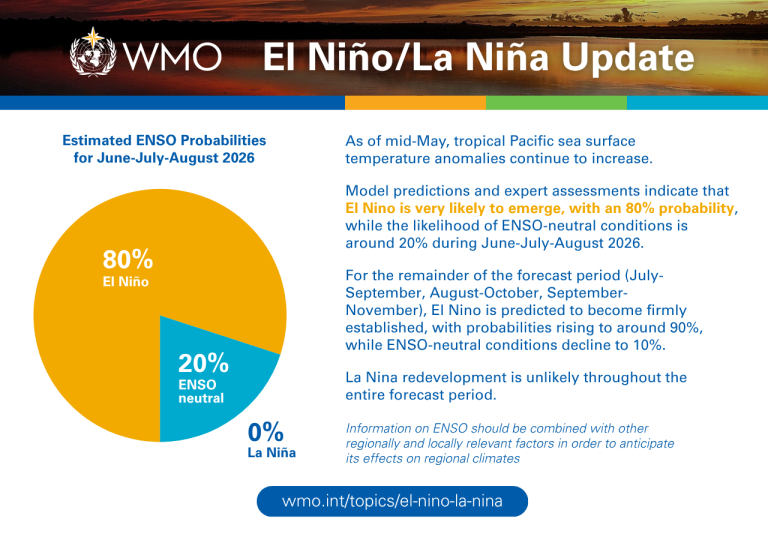
According to the World Meteorological Organization (WMO), there is an 80% probability of El Niño conditions developing between June and August 2026, while the likelihood of the event continuing through at least November is close to or above 90%.
The forecast comes as unusually warm waters build across the central and eastern equatorial Pacific. Scientists say most forecast models currently point toward an event that could be moderate or potentially strong, although the exact peak strength and timing remain uncertain.
Why El Niño Matters
El Niño is a naturally occurring climate pattern that can influence weather far beyond the Pacific Ocean. It can change rainfall patterns, increase global temperatures and raise the likelihood of extreme weather in different regions.
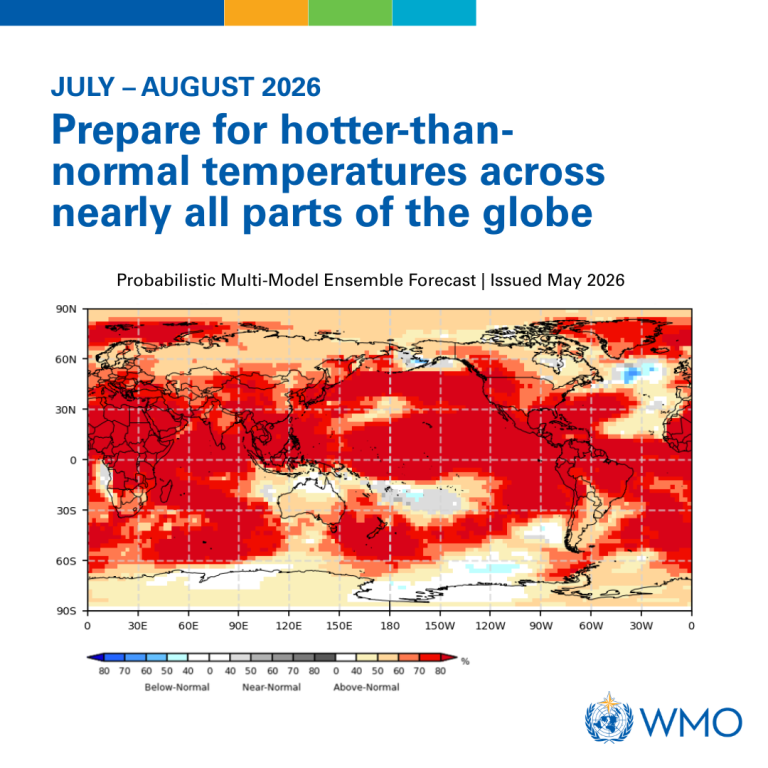
The WMO expects above-average temperatures across nearly the entire globe during June–August, increasing concerns about heat stress and worsening drought conditions in areas where rainfall is limited. At the same time, other regions could face increased risks of heavy rainfall and flooding.
The impact will not be the same everywhere. El Niño is typically associated with wetter conditions in parts of southern South America, the southern United States, the Horn of Africa and central Asia, while areas including Australia, Indonesia, parts of southern Asia and Central America can experience drier conditions.
Advertisement
A Warning for Governments and Communities
The WMO says the time for preparation is now. Early forecasts can help governments, farmers, health services, energy providers and water managers make decisions before extreme conditions develop.
The organization is also highlighting the importance of early-warning systems, particularly for communities that are most vulnerable to heatwaves, droughts, floods and other climate-related hazards.
The latest outlook also points to below-average rainfall risks in parts of South Asia, while Central America is expected to face warmer and drier conditions. Regional forecasts remain important because El Niño's effects can vary significantly from one location to another.
What Happens Next?
Scientists will continue monitoring ocean temperatures and atmospheric conditions across the Pacific in the coming months. The strength and duration of the developing El Niño will determine how significant its global impacts become.
One thing is already clear: 2026 could be a year when weather patterns become increasingly difficult to ignore.
With an 80% chance of El Niño developing during the June–August period and a probability near or above 90% of conditions continuing through at least November, the WMO is calling for informed decision-making and early preparation.
For communities around the world, the message is simple: prepare now, monitor the forecasts and be ready for a changing climate pattern.
Advertisement
Comments
to leave a comment.
Advertisement