2026 Iran War: How the Conflict Is Reshaping the Middle East and Global Economy
2026 Iran War: How a Regional Conflict Is Reshaping the Middle East and the Global Economy
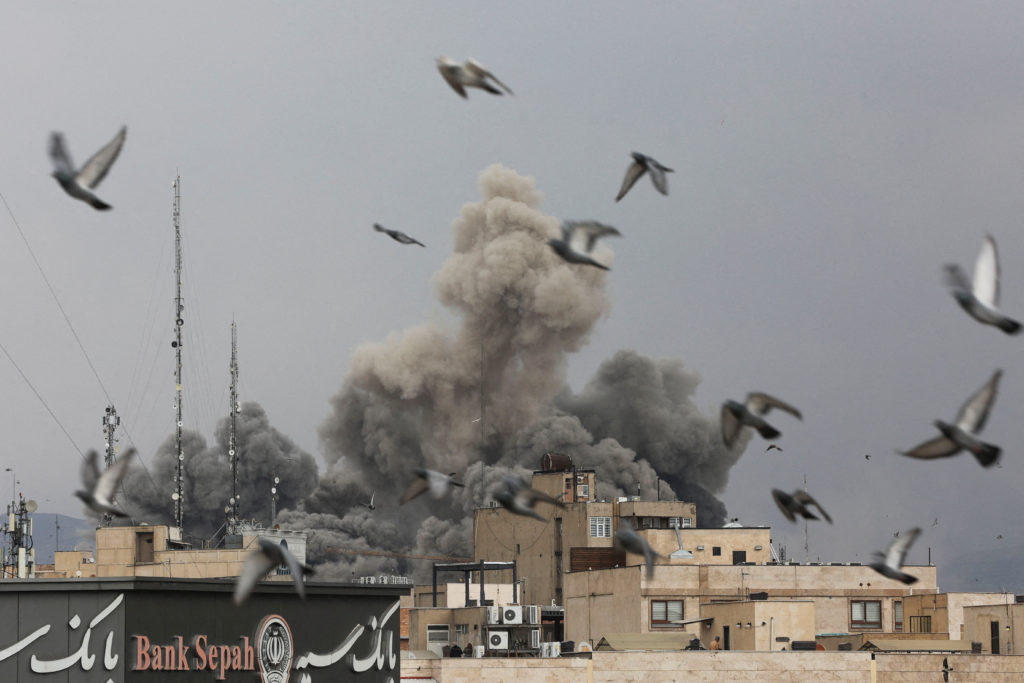
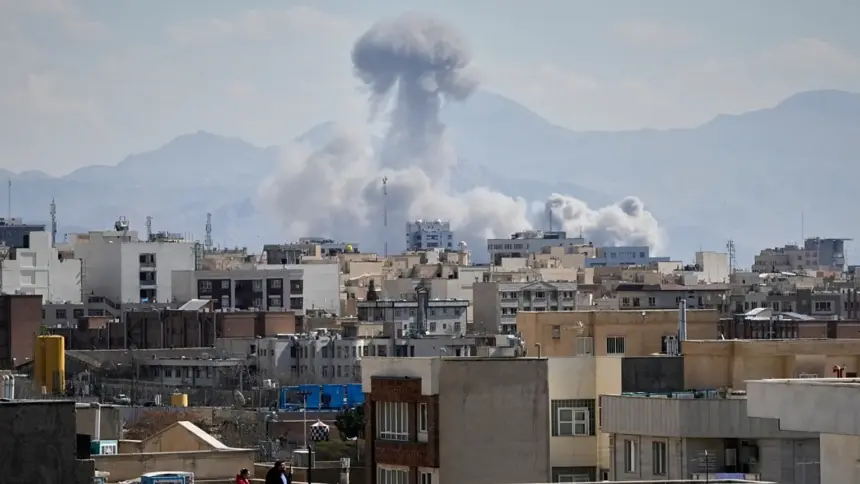
The 2026 Iran war has become one of the most consequential conflicts in the Middle East in recent years, dramatically changing regional security dynamics while creating new risks for global energy markets, international trade, and diplomacy.
The conflict began on February 28, 2026, when the United States and Israel launched a major joint military campaign against Iran. The opening attacks targeted Iranian missile systems, air defenses, military infrastructure, and senior leadership. The United States referred to its campaign as Operation Epic Fury.
The initial strikes reportedly killed Iran's Supreme Leader Ali Khamenei, along with several senior Iranian officials. The sudden loss of key leadership figures created enormous uncertainty inside Iran, but the country's political system quickly moved to establish new leadership.
Iran responded with a large-scale campaign of ballistic missile and drone attacks. Rather than limiting its response to Israel, Iranian strikes and threats extended across the region, targeting or threatening U.S. military facilities and interests in countries including Iraq, Qatar, Bahrain, Kuwait, Saudi Arabia, the United Arab Emirates, Jordan, and Oman.
The conflict had quickly evolved from a direct confrontation between Iran, Israel, and the United States into a broader regional crisis.
The War Spreads to Lebanon
One of the most serious consequences of the conflict was the renewed fighting between Israel and Hezbollah in Lebanon.
Hezbollah, a powerful Iran-backed political and militant organization, had maintained a fragile ceasefire with Israel following earlier fighting. However, after the start of the Iran war, Hezbollah launched missiles and drones toward Israel, leading to a major Israeli military response.
Israeli airstrikes expanded across parts of Lebanon, while Israeli ground forces moved into southern Lebanon. Large numbers of civilians were forced to leave their homes as the fighting intensified.
The renewed conflict created another major humanitarian crisis in the region and demonstrated how closely connected the various conflicts in the Middle East have become.
The fighting also revived long-standing disputes over the area south of the Litani River, a strategically important region that has been at the center of previous confrontations between Israel and Hezbollah.
The Strait of Hormuz Becomes a Global Flashpoint
Perhaps the biggest international concern during the war has been the Strait of Hormuz.
The narrow waterway connects the Persian Gulf with the Gulf of Oman and is one of the world's most important energy shipping routes. Major oil-producing countries, including Iran, Iraq, Kuwait, Saudi Arabia, and the United Arab Emirates, rely heavily on maritime routes through the region.
As the war intensified, commercial shipping through the Strait of Hormuz fell dramatically. Shipping companies began avoiding the area because of the risk of military confrontation, attacks, and restrictions on vessel movement.
The disruption immediately affected global energy markets.
Oil prices climbed sharply, while countries in Asia that depend heavily on Persian Gulf energy supplies faced concerns over fuel availability. The crisis showed how quickly a conflict in one strategic region can create economic consequences thousands of miles away.
The United States later introduced measures to restrict or control shipping connected to Iranian ports, while Iran attempted to establish its own rules and protocols for vessels traveling through the strait.
The disagreement became one of the central obstacles to achieving a lasting peace agreement.
Ceasefire Offers a Temporary Pause
After more than five weeks of intense fighting, the United States and Iran agreed to a ceasefire in early April.
The agreement temporarily reduced direct military confrontation, but it did not resolve the fundamental disputes between the two countries.
Negotiations continued, with Pakistan and other regional actors playing roles in mediation. Direct discussions between senior U.S. and Iranian representatives represented a significant diplomatic development, given the long history of hostility between Washington and Tehran.
However, several issues remained unresolved, including Iran's nuclear program, sanctions, regional security, and access to the Strait of Hormuz.
The situation remained particularly fragile because the conflict in Lebanon continued to complicate negotiations.
A New Attempt at a Long-Term Agreement
In June, diplomatic efforts produced a memorandum of understanding intended to move the conflict toward a more permanent settlement.
The agreement reportedly included several major elements, including the cessation of hostilities in Lebanon, changes to restrictions affecting shipping through the Strait of Hormuz, adjustments to U.S. military deployments in the region, sanctions relief for Iran, and plans connected to Iran's economic reconstruction.
Advertisement
The agreement also established a timeline for further negotiations over Iran's nuclear program.
However, the wording surrounding the Strait of Hormuz quickly became a source of disagreement.
The United States interpreted the agreement as requiring Iran to support safe passage for commercial vessels, while Iran viewed the arrangement as recognizing its authority to establish rules governing maritime traffic.
The dispute eventually escalated again.
Fighting Returns in July
The fragile truce began to break down in July after Iranian forces reportedly attacked commercial vessels traveling through the Strait of Hormuz.
The United States responded with renewed military action against Iranian targets, while the U.S. Navy moved to reimpose restrictions on shipping connected to Iranian ports.
The renewed fighting demonstrated how difficult it has become to separate military operations from economic and maritime security.
By mid-July, the conflict had entered another dangerous phase, with attacks continuing and casualties reported among U.S. personnel.
Iran subsequently announced that it was suspending its commitments under the June memorandum, raising fears that the fragile diplomatic framework could collapse completely.
Why Did the Conflict Happen?
The roots of the 2026 conflict go back decades, but tensions had intensified significantly in recent years.
The United States and Iran have been locked in a long-running dispute over Iran's nuclear program, ballistic missile capabilities, regional military influence, and support for allied armed groups.
The collapse of the 2015 nuclear agreement, known as the Joint Comprehensive Plan of Action (JCPOA), further damaged relations between Tehran and Washington.
At the same time, Iran's regional influence had been weakened by years of economic sanctions, internal political unrest, military setbacks, and the weakening of several of its regional partners.
The 2025 conflict between Iran and Israel also exposed vulnerabilities in Iran's military and air-defense capabilities.
Against this background, the United States and Israel apparently concluded that military action could achieve objectives that diplomacy had failed to deliver.
Iran, however, responded by expanding the battlefield beyond its own territory, increasing the risk of a wider regional war.
The Role of the "Axis of Resistance"
The conflict also highlighted the importance of Iran's network of regional partners and allies, commonly referred to as the Axis of Resistance.
The network includes organizations such as Hezbollah in Lebanon, the Houthi movement in Yemen, Hamas and Palestinian Islamic Jihad, as well as several armed groups in Iraq.
These groups do not operate as a single unified military force, and each has its own interests and objectives. However, Iran has provided varying levels of financial, military, logistical, and political support to several of them.
The network has allowed Iran to project influence across the Middle East without relying exclusively on direct military confrontation.
During the 2026 conflict, this regional network became an important factor in the calculations of Iran, Israel, and the United States.
The Global Economic Impact
The war's effects have not been limited to the Middle East.
The disruption of energy shipments through the Strait of Hormuz has raised concerns about:
Global oil prices
Fuel shortages
International shipping costs
Inflation
Air travel disruptions
Supply chain instability
Energy security
Global economic growth
The conflict also disrupted commercial aviation across the region, with airlines forced to cancel or reroute flights because of security concerns.
Businesses operating across the Middle East faced increased uncertainty, while international investors closely monitored developments in energy markets and geopolitical risk.
For countries that depend heavily on imported oil and gas, prolonged disruption could create significant economic pressure.
A Conflict With Global Consequences
The 2026 Iran war represents more than another Middle Eastern conflict. It has become a test of the international system's ability to manage military escalation, energy security, diplomacy, and regional power competition simultaneously.
The conflict has already demonstrated the vulnerability of critical global trade routes and the interconnected nature of modern economies.
A prolonged confrontation could have consequences for energy prices, international shipping, inflation, and geopolitical alliances far beyond the Middle East.
At the same time, the future of Iran's nuclear program remains one of the most important unresolved questions.
For now, the situation remains highly unstable. The future of the conflict will likely depend on whether the United States and Iran can restore meaningful negotiations, whether tensions surrounding the Strait of Hormuz can be resolved, and whether a broader regional settlement involving Israel and Hezbollah can hold.
One thing is certain: the 2026 Iran war has already changed the strategic landscape of the Middle East—and its consequences may be felt across the world for years to come.
Advertisement
Comments
to leave a comment.
Advertisement